
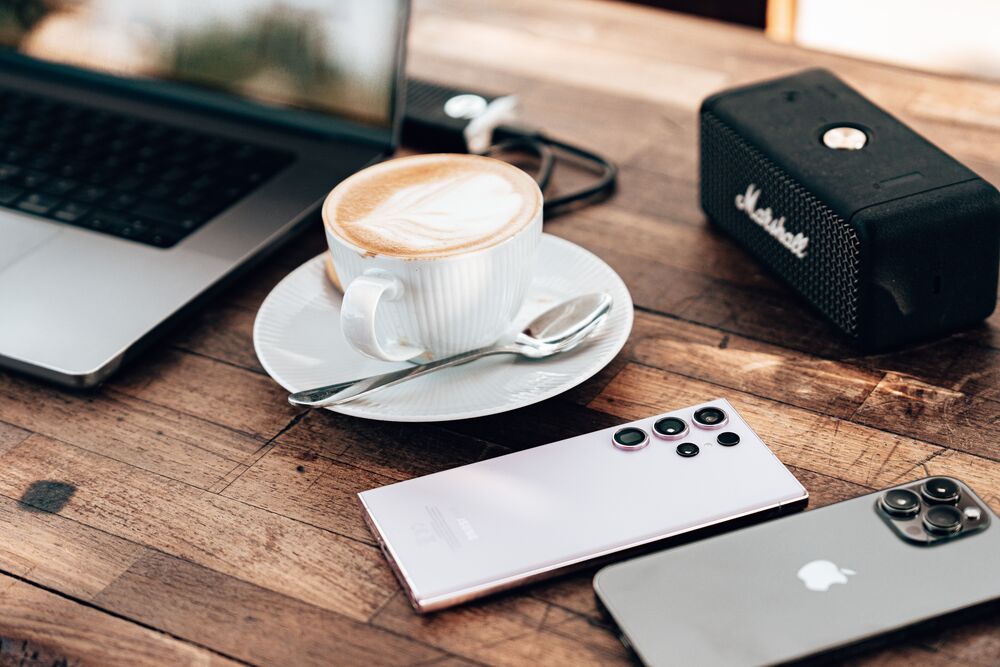
iPhone 17 Pro Max vs Samsung S26 Ultra
The smartphone battle between Apple and Samsung continues to dominate the global tech space, and in 2026, the rivalry reaches a new peak with the iPhone 17 Pro Max vs. Samsung S26 Ultra comparison. These two devices represent the absolute best of premium smartphones, packed with cutting-edge performance, AI-powered features, and next-generation camera systems. If you are planning to upgrade, this detailed breakdown of the iPhone 17 Pro Max vs. Samsung S26 Ultra will help you understand which flagship suits your needs best.
Design and Build Quality
Both manufacturers have refined their design languages, but they have swapped structural philosophies for this generation.
iPhone 17 Pro Max
Apple has shifted its design narrative by introducing a highly polished aluminum unibody construction, departing from the brushed titanium used previously. This change improves thermal dissipation across the larger frame while retaining the iconic, rock-solid minimalist aesthetic.
-
Ergonomics: It features a completely flat-edge design with microscopic edge profiling to ensure it does not dig into your palm.
-
Durability: The front is protected by next-generation Ceramic Shield 2, providing significantly higher shatter resistance.
Samsung S26 Ultra
Samsung has delivered its slimmest flagship profile yet at just 7.9 mm thickness, utilizing a lighter Armor Aluminum frame. Moving away from sharp, boxy lines, the S26 Ultra adopts rounded, ergonomic corners that allow the phone to nestle naturally into the hand despite its massive footprint.
-
Visuals: The rear features a sleek, translucent “ambient island” camera design where the lenses flow seamlessly into the back glass (Gorilla Glass Victus 2).
-
Productivity: The bottom houses the signature integrated S Pen, maintaining its status as a dedicated mobile workstation.
Verdict:
Apple wins on simplicity and structural uniformity.
Samsung wins on industrial ergonomics, sleekness (7.9 mm), and utility.
Display Technology
The screen real estate is matched at a massive 6.9 inches on both devices, but the panel technologies underneath serve different user priorities.
iPhone 17 Pro Max
-
Panel: 6.9-inch LTPO Super Retina XDR OLED (2868 × 1320 pixels, 460 PPI).
-
Performance: Uses an adaptive 1–120Hz ProMotion refresh rate.
-
Brightness: Reaches a blistering 3,000 nits peak outdoor brightness for immaculate HDR10 and Dolby Vision playback. The Dynamic Island remains, now tightly integrated with live tracking widgets.
Samsung S26 Ultra
-
Panel: 6.9-inch Dynamic LTPO AMOLED 2X flat display with a sharper QHD+ resolution (3120 × 1440 pixels, 511 PPI).
-
Anti-Reflection: Protected by Corning Gorilla Armor 2, which actively cuts down surface glare in harsh outdoor light.
-
The Game Changer: Features the world’s first hardware-integrated Privacy Display on a mobile device. When toggled, it uses directional optical filtering to block side-angle viewing from prying eyes in public spaces without sacrificing screen quality when viewed dead-on.
Display Comparison Specs: iPhone 17 Pro Max vs Samsung S26 Ultra
| Feature | iPhone 17 Pro Max | Samsung S26 Ultra |
|---|---|---|
| Resolution | 2868 × 1320 (460 ppi) | 3120 × 1440 (511 ppi) |
| Peak Brightness | 3,000 nits | 2,600 nits |
| Glare Reduction | Standard coating | Gorilla Armor 2 (high) |
| Special Feature | Dynamic Island UI | Hardware Privacy Screen |
Verdict: Samsung takes the clear win. While Apple is brighter, Samsung offers higher pixel density, superior anti-reflection, and ground-breaking privacy hardware.
Performance and Processor Power
Both silicon chipsets are manufactured on cutting-edge 3-nanometer nodes, pushing mobile processing boundaries to desktop-class heights.
iPhone 17 Pro Max
Powered by Apple’s A19 Pro chip, paired uniformly with 12GB of RAM. Apple’s vertical integration allows the 6-core CPU and 6-core GPU to wring out incredible efficiency. Operating system optimization within iOS ensures that heavy background tasks, architectural rendering, or pro-grade video exporting don’t cause micro-stuttering or sudden battery drains.
Samsung S26 Ultra
Features the customized Snapdragon 8 Elite Gen 5 for Galaxy. It steps up the multitasking ceiling by offering memory configurations up to a massive 16GB of RAM on the 1TB storage tier.
-
Cooling: To prevent thermal throttling under heavy loads, Samsung integrated its largest internal Vapor Chamber cooling system yet, improving heat dissipation by 21%.
-
AI Speed: Its upgraded Neural Processing Unit (NPU) boosts on-device Galaxy AI operations by 39%, running localized computational tools seamlessly.
Verdict: A structural tie. Apple leads in raw single-core efficiency and hardware-software optimization, while Samsung wins for absolute computing headroom and sustained cooling performance during heavy multitasking.
Camera Comparison
The battle between Apple’s color science and Samsung’s pure hardware metrics remains highly competitive.
iPhone 17 Pro Max
Apple moves to a fully realized triple 48MP camera system (Fusion Main, Ultra-Wide, and a 4x Tetraprism Telephoto).
-
Photography: Shoots ultra-high-resolution 24MP and 48MP baseline photos with immaculate, true-to-life color reproduction.
-
Videography: The undisputed king. It supports 4K Dolby Vision and ProRes RAW recording up to 120 fps directly to external storage via its high-speed USB-C port, supplemented by advanced Log 2 color grading and Genlock support for professional film sets.
Samsung S26 Ultra
Samsung deploys an absolute powerhouse quad-camera array backed by its ProVisual Engine.
-
Lenses: A massive 200MP main sensor (with a wider F1.4 aperture for 47% improved low-light capture), a 50MP Ultra-Wide, a 10MP 3x Telephoto, and a upgraded 50MP periscope lens offering 5x optical and 10x optical-quality zoom.
-
Capabilities: Combined with AI ISP enhancements, its 100x Space Zoom captures distinct distant subjects with minimal digital artifacting. For video creators, it debuts support for the new professional APV codec, preserving data integrity over multiple edits.
Verdict:
iPhone dominates video production workflow, codec selection, and natural processing.
Samsung dominates zoom versatility, low-light raw photography, and absolute resolution.
Battery Life and Charging
iPhone 17 Pro Max
Houses a highly optimized battery (~4800 to 5088 mAh depending on cellular configuration) that relies on the A19 Pro’s efficiency to safely clear a day and a half of typical use. Charging speeds have improved, now supporting up to 45W wired charging and 25W via MagSafe/Qi2 wireless connections, hitting a 50% charge in about 20 minutes.
Samsung S26 Ultra
Maintains a robust 5,000 mAh cell but significantly slashes downtime by upgrading to Super Fast Charging 3.0 (60W wired). This allows the phone to safely reach a 75% charge in just 30 minutes. Wireless charging matches at 25W, and it still includes 4.5W reverse wireless charging to juice up accessories like wireless earbuds on the go.
Verdict: Samsung wins. It charges significantly faster on a wired connection and provides more aggressive power features for demanding users.
Software and Ecosystem
iPhone 17 Pro Max (iOS)
Focuses on absolute fluidity, multi-year security stability, and a highly protective permissions framework. Its true value lies in the unmatched ecosystem loop. Features like AirDrop, Universal Clipboard, Apple Watch unlock, and seamless iPad/Mac integration create a frictionless environment if you are already bought into the Apple family.
Samsung S26 Ultra (One UI on Android)
An absolute playground for personalization and standalone desktop utility. Aside from deep visual customization, it acts as a literal computer replacement via Samsung DeX, allowing you to plug into a monitor for a full windowed desktop experience. Samsung explicitly backs this device with 7 years of major OS and security updates, ensuring longevity that matches Apple’s historical standards.
Verdict:
Apple wins for ecosystem cohesion, consistency, and intuitive operation.
Samsung wins for standalone power features, UI customization, and desktop convergence.
Summary Comparison Matrix
| Feature | Winner | Key Differentiating Factor |
| Design & Build | Tie | Apple focuses on structural minimalist refinement; Samsung delivers a sub-8mm ultra-slim body with an integrated S Pen. |
| Display | Samsung S26 Ultra | Sharper QHD+ panel, Gorilla Armor 2 glare-reduction, and a built-in hardware Privacy Screen. |
| Performance | Tie | Apple’s A19 Pro leads in raw processing optimization; Snapdragon 8 Elite offers up to 16GB RAM and a 21% larger vapor cooling chamber. |
| Camera (Photo) | Samsung S26 Ultra | Unmatched 100x Space Zoom flexibility, 5x/10x dual optical tiers, and a 200MP F1.4 low-light lens. |
| Camera (Video) | iPhone 17 Pro Max | Professional 4K/120fps ProRes RAW capabilities, Log 2 support, and industry-standard stabilization. |
| Battery & Power | Samsung S26 Ultra | Considerably faster 60W wired charging speeds (75% in 30 minutes) and versatile reverse wireless charging. |
| Software | Tie | iOS offers rock-solid ecosystem synergy; One UI provides unparalleled customization and desktop-level Samsung DeX. |
Get the Best Flagship Deals on iPhone 17 Pro Max & Samsung S26 Ultra Today at PhoneShop Kenya
The iPhone 17 Pro Max vs. Samsung S26 Ultra comparison shows just how advanced smartphones have become in 2026. Both devices deliver exceptional performance, premium design, and industry-leading features, making them top choices for tech enthusiasts and professionals alike.
If you are looking to upgrade to the latest flagship smartphones in Kenya, PhoneShop Kenya offers a wide range of original devices at competitive prices. Whether you prefer Apple or Samsung, you can find the best deals, genuine products, and reliable customer support to help you get the perfect smartphone for your needs.