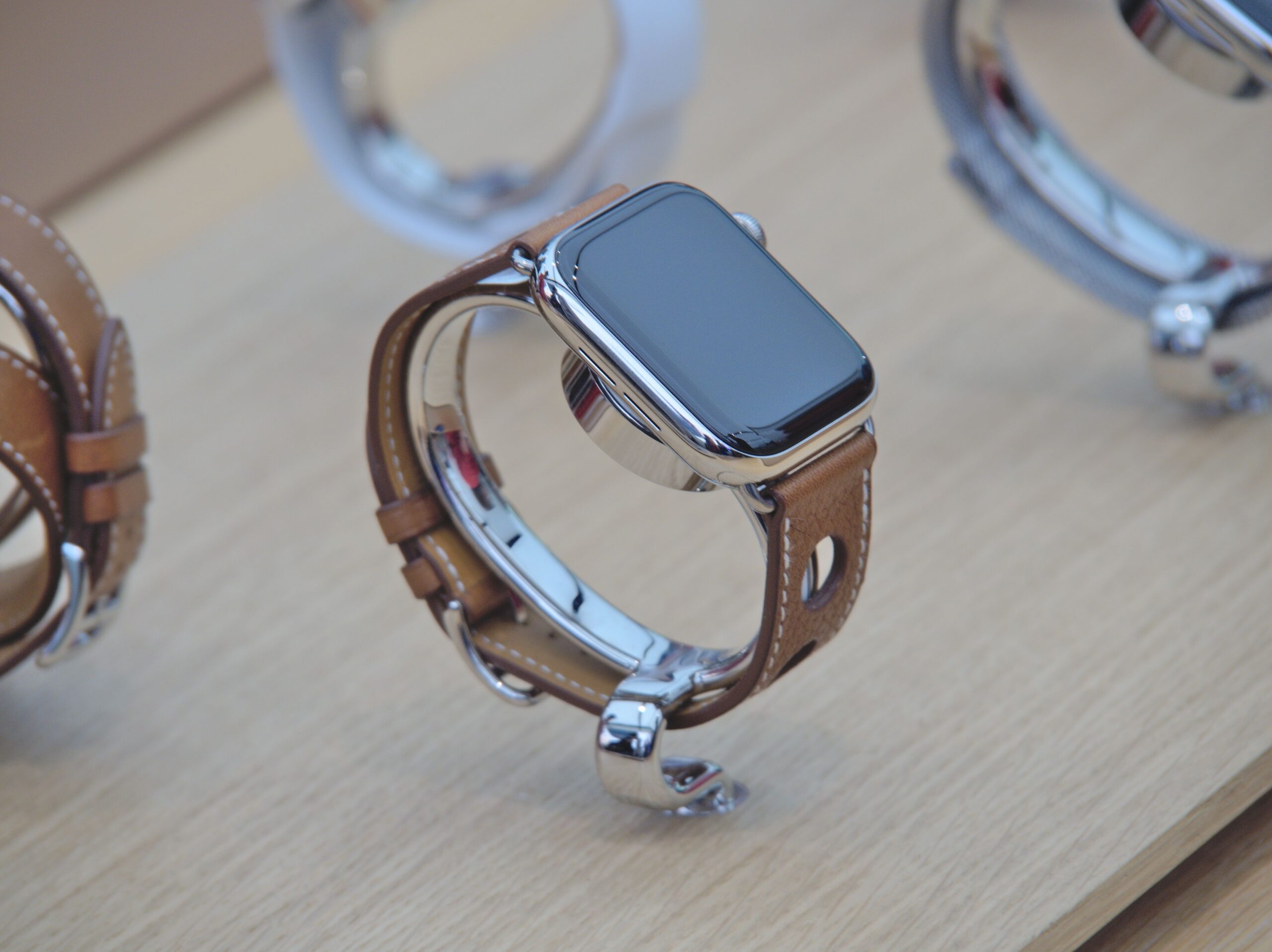
Choosing the right smartwatch can feel overwhelming, especially when two giants dominate the market: Apple and Samsung. The debate of Apple Watch vs Samsung Galaxy Watch continues to grow as both brands push the limits of health tracking, performance, and smart features. While the Apple Watch is known for its seamless integration within the Apple ecosystem and advanced health monitoring, the Samsung Galaxy Watch stands out with its versatile Android compatibility, powerful battery life, and innovative fitness tools.
In this comparison of Apple Watch vs Samsung Galaxy Watch, we break down their design, display, health features, battery life, and overall user experience to help you decide which smartwatch best fits your lifestyle. Whether you’re a fitness enthusiast, a busy professional, or a tech lover, this guide will help you make a confident choice.
1. Ecosystem Lock-In: The Ultimate Dealbreaker (Apple Watch vs Samsung Galaxy Watch)
Before diving into screen brightness, sensor accuracy, or styling options, we must first address the most important factor in the Apple Watch vs Samsung Galaxy Watch debate: compatibility. Unlike secondary accessories such as wireless earbuds, which can generally function across different platforms, smartwatches are deeply integrated into their respective ecosystems. As a result, each device acts as a gateway into either Apple’s or Samsung’s software universe, making your choice heavily dependent on the smartphone you already use.
The Apple Watch Compatibility Wall
The Apple Watch is entirely unyielding when it comes to device compatibility. Specifically, it requires an iPhone to set up, sync, configure, and maintain. Therefore, if you carry an Android smartphone—whether it is a Samsung Galaxy, a Google Pixel, or a Xiaomi device—the Apple Watch is completely non-functional for you. Furthermore, there is no companion app available on the Google Play Store, and there are absolutely no workarounds that provide a stable, meaningful experience.
The Galaxy Watch Android Boundary
In contrast, Samsung operates within a similar, albeit slightly wider, boundary. The Samsung Galaxy Watch runs on Google’s Wear OS layered with Samsung’s custom One UI Watch interface. Consequently, it is strictly compatible with Android devices running Android 11.0 or higher with more than 1.5GB of RAM. However, it will not pair with an iPhone under any circumstances.
Furthermore, while the Galaxy Watch will pair with any modern Android smartphone, Samsung reserves a select tier of advanced features exclusively for users who pair the watch with a Samsung Galaxy smartphone. For instance, these platform-exclusive features include:
-
Electrocardiogram (ECG) tracking and Blood Pressure monitoring, which require the Samsung Health Monitor app available only on the Galaxy Store.
-
Advanced Galaxy AI metrics, such as the personalized “Energy Score.”
-
Hand gesture controls and remote camera shutter activation.
The Verdict on Compatibility: Your current smartphone choice makes 90% of this decision for you. Thus, if you are an iPhone user, your destination is the Apple Watch. Alternatively, if you are an Android user—especially within the Samsung ecosystem—the Galaxy Watch is your clear path forward.
2. Design, Display, and Everyday Wearability
A smartwatch is simultaneously a sophisticated piece of digital hardware and an item of personal fashion. Accordingly, both brands have developed distinct, recognizable design languages that appeal to different visual preferences.
| Feature | Apple Watch | Samsung Galaxy Watch |
| Core Design Philosophy | Rectangular, modern digital squircle | Traditional, circular timepiece |
| Display Panel | Retina LTPO3 Wide-Angle OLED | Super AMOLED |
| Peak Brightness | 2,000 nits | 2,000 to 3,000 nits |
| Navigation Elements | Digital Crown & Side Action Button | Digital Touch Bezel / Physical Bezel |
| Case Materials Available | Recycled Aluminum / Polished Titanium | Armor Aluminum / Stainless Steel |
Form Factor and Case Aesthetics
Apple has championed the rectangular “squircle” geometry since its inception. Primarily, this architecture maximizes screen real estate for vertical text layouts, making it exceptionally efficient for reading message threads, scanning calendar events, and interacting with dense user interfaces. In addition, the modern chassis features remarkably thin bezels, pushing the display edge-to-edge with a curved profile that blends cleanly into the metallic frame.
On the other hand, Samsung takes a diametrically opposed approach by celebrating the heritage of classic horology. Specifically, the Galaxy Watch utilizes a circular display housed within a clean, round chassis. As a result, for users who prefer their smartwatch to masquerade as an elegant traditional timepiece rather than announcing itself as a digital gadget, Samsung’s round architecture is highly appealing. Moreover, the standard model offers a sleek, sport-centric profile, while the Classic variation reintroduces a physical rotating bezel that provides tactile clicks for navigating menu items without obscuring the screen.
Display Innovations and Visibility
Both manufacturers deliver screen technology that ensures immaculate legibility even under direct afternoon sunlight. To achieve this, Apple utilizes a refined Retina LTPO3 Wide-Angle OLED panel. This technology optimizes light emission at wider viewing angles, meaning you can glance down at your wrist while typing or driving without needing to aggressively tilt your arm. Meanwhile, it scales up to a peak brightness of 2,000 nits while dropping down to a power-saving 1 nit when your wrist is lowered.
In comparison, Samsung counters with a Super AMOLED panel that achieves a peak brightness of up to 3,000 nits on its latest high-end models. Consequently, this makes it an incredibly bright display option, maintaining rich color saturation and sharp contrast even under bright ambient conditions.
Interaction and Controls
Navigating a tiny interface requires precise input mechanisms. For this reason, Apple relies heavily on its haptic Digital Crown, allowing you to scroll through lists smoothly with fine physical vibrations confirming your movements. Simultaneously, a secondary side button manages multitasking and quick access to your application dock.
Conversely, Samsung offers a highly interactive experience through its bezel design. For example, the baseline Galaxy Watch models feature a capacitive touch bezel where you slide your fingertip around the black outer ring of the glass to scroll through widgets. Meanwhile, the Classic version takes this a step further with a physical, mechanical rotating ring that acts as a satisfying, precise mechanical input tool.
3. Health, Wellness, and Advanced Sensor Tracking
Both devices serve as sophisticated diagnostic labs wrapped around your wrist. Indeed, they go far beyond basic step counting, incorporating advanced biometric sensor arrays that actively monitor cardiovascular health, metabolic trends, and sleep architecture.
Cardiovascular Insights
Both wearables track continuous heart rate, heart rate variability (HRV), and resting heart rate averages.
-
Apple Watch: Features an electrical heart sensor and a third-generation optical heart sensor. Thus, it allows users to take on-demand ECGs to detect signs of Atrial Fibrillation (AFib). In addition, the watch continuously scans in the background, issuing proactive alerts if your heart rate spikes or drops unexpectedly beyond safe thresholds.
-
Galaxy Watch: Utilizes Samsung’s proprietary BioActive Sensor, which combines three powerful health sensors onto a single chip. As a result, it matches Apple’s capability by delivering accurate ECG readings and background irregular heart rhythm notifications. Additionally, in regions with regulatory clearance, it supports direct blood pressure monitoring once calibrated against a traditional upper-arm cuff.
Sleep Architecture and Apnea Detection
Sleep tracking has evolved from simple movement logging into detailed respiratory and structural analysis. Naturally, both platforms provide comprehensive breakdowns of your deep, light, and REM sleep cycles, and both feature validated sleep apnea detection systems to monitor nighttime breathing disruptions.
Specialized Health Categories
| Apple Watch Health Strengths | Samsung Galaxy Watch Health Strengths |
| High-Accuracy ECG & AFib Alerts | Bioelectric Impedance (BIA) Body Composition Analysis |
| Integrated Water Depth/Temperature Tracking | Advanced AGEs (Advanced Glycation End-products) Index |
| Seamless Apple Health Ecosystem Integration | Holistic Sleep Coaching Programs |
This is the area where the two brands diverge into entirely unique diagnostic categories:
-
Samsung’s Body Composition Analysis (BIA): By sending a micro-current through your fingers when touching the watch buttons, the Galaxy Watch measures body fat percentage, skeletal muscle mass, body water volume, and Basal Metabolic Rate (BMR). Furthermore, it includes an Advanced Glycation End-products (AGEs) Index tracker, which monitors skin biomarkers associated with metabolic health and biological aging trends.
-
Apple’s Environmental Adaptations: Alternatively, Apple has integrated a depth gauge (certified down to 6 meters) alongside an ambient water temperature sensor on its latest Series models. Consequently, this makes it an incredibly capable companion for snorkelers, open-water swimmers, and shallow divers who require precise aquatic telemetry directly in their workout dashboard.
4. Fitness Tracking and Sports Analytics
Whether you are training for a marathon along high-altitude trails or tracking an evening strength session at a local gym, the Apple Watch vs Samsung Galaxy Watch showdown delivers exceptionally deep athletic performance data.
Satellite Tracking Precision (GPS)
For outdoor athletes, GPS precision is critical for accurate pace mapping, distance tracking, and route generation. To address this, recent generations of the Galaxy Watch rely on a dual-frequency L1 + L5 GPS infrastructure directly in baseline models. By doing so, it pulls signals from two separate frequencies across satellite networks, which minimizes signal degradation caused by tall buildings, dense forest canopies, or heavy weather.
In contrast, the standard Apple Watch utilizes a highly optimized L1 GPS system paired with an advanced local positioning algorithm that cross-references cellular towers and Wi-Fi networks. However, for athletes demanding dual-frequency L5 tracking in the Apple family, the upgrade path leads to the rugged Apple Watch Ultra series, whereas Samsung includes the dual-frequency hardware directly in its baseline flagship models.
Workout Customization and UI Layouts
Apple’s Workout app is exceptionally clean, structured, and deep. Specifically, it offers customizable data screens allowing you to display heart rate zones, power outputs, elevation gains, or custom intervals. Moreover, it includes an automated Activity Ring system explicitly designed to motivate you to hit daily active calorie burn, exercise minutes, and standing targets.
Meanwhile, Samsung’s fitness suite leverages its Galaxy AI framework to provide an automated Energy Score each morning. In particular, this metric aggregates your sleep time, sleep consistency, previous day’s activity, and resting heart rate. As a result, it lets you know if your body is ready for a high-intensity workout or if you should prioritize active recovery.
5. Software Ecosystem, Performance, and Battery Life
A great smartwatch must feel fast, intuitive, and independent of its host smartphone for core tasks. Undeniably, the underlying operating systems define how you interact with apps and notifications throughout the day.
Interface Fluidity and Core Horsepower
Apple’s custom silicon—featuring a dedicated 4-core Neural Engine—delivers an incredibly smooth user experience. As a benefit, transitions occur at high refresh rates, applications launch instantly, and the machine-learning cores allow for unique interactions like the Double Tap gesture. For example, by pinching your thumb and index finger together twice, you can answer calls, pause timers, or dismiss notifications completely hands-free.
Similarly, Samsung’s Exynos chipsets, built on efficient 3-nanometer architecture, power its interface. Furthermore, backed by 2GB of RAM, this processor allows Wear OS to move quickly across tiles, execute background app refreshes smoothly, and manage power effectively.
| Metric | Apple Watch Flagship | Samsung Galaxy Watch Flagship |
| Operating System | watchOS Series Ecosystem | Wear OS (Powered by One UI Watch) |
| Onboard Storage | 64GB (Massive Media/App Capacity) | 32GB (High Offline Capacity) |
| Normal Battery | Up to 18-24 Hours | Up to 30-40 Hours |
| Low Power Mode | Up to 36-38 Hours Extended | Up to 45+ Hours Extended |
Digital Companions: Siri vs. Google Gemini
Voice assistants are essential for hands-free interactions on small wearable displays. To support this, Apple relies on Siri, which processes core requests entirely on-device via its Neural Engine. Consequently, this means dictating text replies, starting timers, or logging health metrics happens locally on your wrist, providing instant response times even without an active internet connection.
On the other hand, Samsung natively integrates Google Gemini alongside its own Bixby platform. Therefore, having Gemini directly on the wrist gives Android users access to an exceptionally smart, context-aware AI assistant capable of drafting complex messages, summarizing notifications, and answering nuanced questions on the go.
Storage Capacity for Media and Apps
If you want to download offline playlists from Spotify or Apple Music so you can run without your smartphone, storage capacity matters. In this category, Apple Watch provides a massive 64GB of internal storage, offering plenty of room for audio files, offline maps, and third-party apps. In comparison, the Galaxy Watch offers 32GB of internal storage, which is nevertheless more than enough for a large music library and all your essential workout tracking applications.
The Real-World Battery Longevity Reality
Battery capacity remains a primary challenge for full-featured smartwatches. Because these devices feature high-resolution displays, continuous health sensors, and active background processors, they require regular charging.
Apple targets an “all-day” battery runtime rating of 18 to 24 hours under normal usage patterns. In practice, this means you will establish a daily charging routine—either placing the watch on its fast charger while you shower in the morning or letting it top up before bed. However, its Low Power Mode extends this lifecycle out to roughly 36 to 38 hours by disabling the Always-On display and restricting background heart rate checks.
Conversely, Samsung holds a distinct advantage in raw battery endurance. Thanks to its larger battery cells and efficient 3nm Exynos chip architecture, the baseline Galaxy Watch can consistently stretch between 30 to 40 hours of active use per charge. Therefore, if you selectively toggle off the Always-On display or engage its power-saving algorithms, you can easily secure two full days of tracking before needing a charging dock.
6. Making the Final Decision: Which is Right for You?
To make your purchasing path as clear as possible, let’s look at the specific scenarios where each watch stands out as the absolute winner.
Buy the Apple Watch if…
-
Your primary phone is an iPhone: As mentioned, this is a non-negotiable prerequisite to access the watch’s ecosystem.
-
You value fluid interface design: Specifically, the combination of watchOS transitions, the haptic Digital Crown, and on-device Siri commands provides an incredibly polished user experience.
-
You engage in aquatic activities: For instance, the built-in water temperature sensor and deep snorkeling telemetry software make it an ideal choice for swimmers and divers.
-
You require maximum onboard storage: Ultimately, the 64GB capacity ensures you will never have to micromanage your offline music playlists.
Buy the Samsung Galaxy Watch if…
-
You are an Android or Samsung Galaxy user: Clearly, it is the benchmark wearable designed specifically to complement the Android hardware ecosystem.
-
You prefer a classic timepiece look: As a result, the circular frame design blends seamlessly into corporate, formal, or casual wardrobe styling without looking like a tech accessory.
-
You want advanced body diagnostics: For example, the ability to perform BIA body fat analysis, track metabolic health via the AGEs index, and monitor blood pressure offers a uniquely holistic approach to body composition.
-
You want longer battery lifecycles: Consequently, its multi-day endurance capabilities mean you spend less time anchored to a wall outlet and more time actively tracking your life.
Upgrade Your Wrist at PhoneShop Kenya
Now that you have chosen the perfect smartwatch companion in the clash of Apple Watch vs Samsung Galaxy Watch, it is vital to source your new hardware from a trusted partner that guarantees authenticity, official product warranties, and competitive local pricing.
Therefore, whether you are ready to secure the sleek, square elegance of the latest Apple Watch or want to leverage the advanced body tracking and circular design of the Samsung Galaxy Watch, PhoneShop Kenya has you covered. In addition to offering genuine products and helpful customer support, we provide fast, reliable delivery straight to your doorstep across Kenya. Thus, you can easily avoid the risk of grey-market counterfeits and elevate your digital lifestyle today.